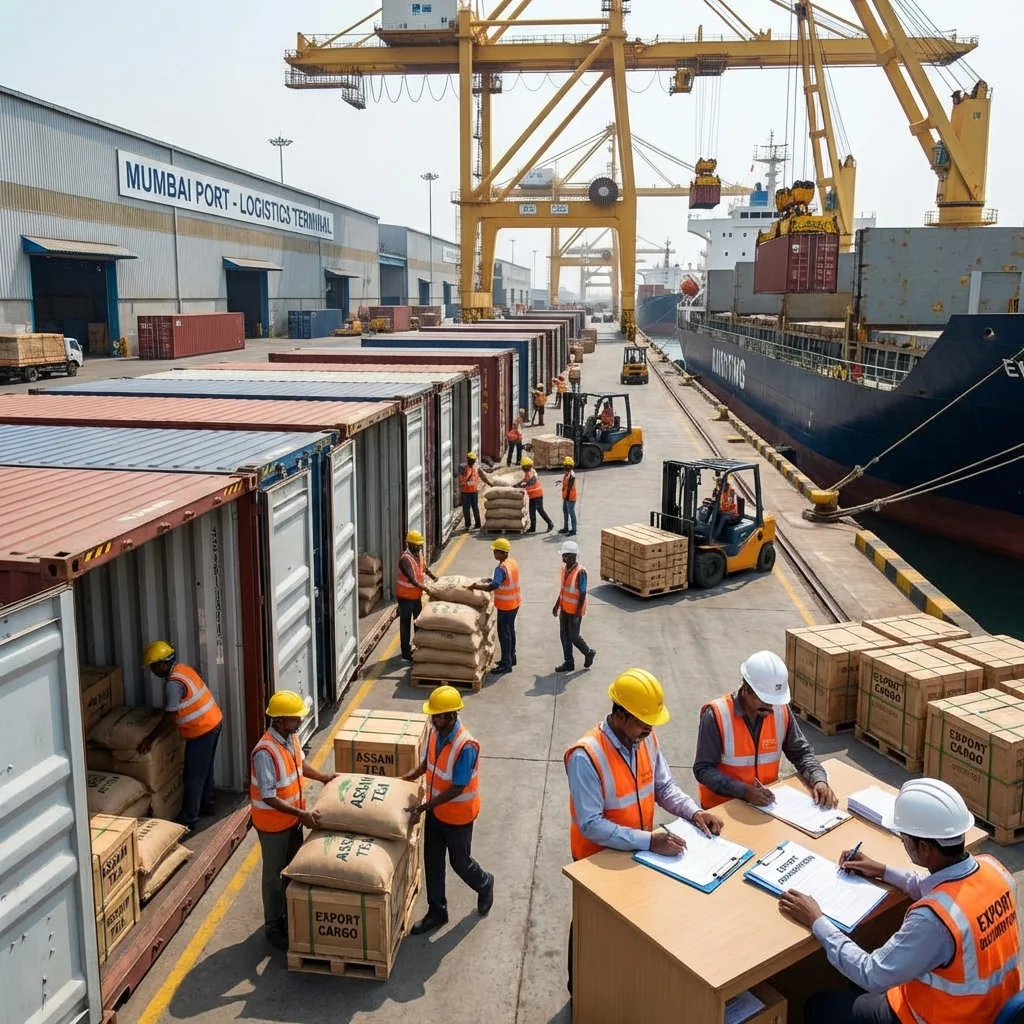
India exports 250+ million kg of tea annually. If you're setting up an export business or sourcing Indian tea for an international buyer, getting the documentation right is not optional — one missing certificate can hold a shipment at customs or fail an import inspection. This guide covers everything you need, including a section on Darjeeling tea's additional GI compliance requirements that most export guides miss entirely.
Essential Licenses & Registrations
1. IEC (Import Export Code)
- Issued by: DGFT (Directorate General of Foreign Trade)
- Cost: ₹500 (online)
- Time: 2–3 days
- Validity: Lifetime
2. FSSAI License
- Type needed: Central License (for export)
- Cost: ₹7,500/year
- Mandatory: For all food exports
3. Tea Board Registration
- Required for: Tea exporters
- Benefits: Export subsidies, market access
- Contact: Tea Board of India, Kolkata
4. APEDA Registration (Optional)
- For: Organic tea exports
- Benefits: Certification support
Quality & Testing Requirements
MRL (Maximum Residue Limits) Compliance
Different countries have different pesticide limits. Know your destination before you test:
- EU: Strictest standards (400+ pesticides tested)
- USA: FDA regulations
- Japan: Positive list system
- Middle East: Moderate standards
Testing Labs (NABL Accredited)
- Tea Research Association, Kolkata
- FSSAI approved labs
- Cost: ₹15,000–₹30,000 per test
- Time: 7–10 days
Export Documentation
Pre-Shipment Documents
- Proforma Invoice: Detailed quotation
- Purchase Order: From buyer
- Letter of Credit: Payment guarantee (if applicable)
Shipping Documents
- Commercial Invoice: Final bill
- Packing List: Container details
- Bill of Lading: Shipping receipt
- Certificate of Origin: India origin proof
- Phytosanitary Certificate: Plant health certificate
- Test Report: MRL compliance
- FSSAI Certificate: Food safety compliance
Exporting Darjeeling Tea: Extra Requirements
If you're exporting Darjeeling tea specifically, there's a compliance layer on top of everything above that doesn't apply to CTC, Assam, or Dooars tea — and getting it wrong can get a shipment held at customs.
Why Darjeeling Tea Is Different
Darjeeling was the first product in India to receive Geographical Indication (GI) protection, granted in 2004. This status exists because tea from Kenya, Sri Lanka, and Nepal has repeatedly been mislabelled and sold internationally as "Darjeeling" — the GI system exists specifically to stop that.
The Tea Board License Requirement
Since February 2000, it's been mandatory for anyone dealing in Darjeeling tea — including exporters and traders, not just growers — to hold a valid license agreement with the Tea Board of India. Without it, customs will not clear a Darjeeling tea shipment for export.
- Certificate of Origin is mandatory for every export consignment. Issued only after the Tea Board cross-checks the shipment against the originating garden's invoice records — so the paper trail has to be genuine and traceable back to an actual licensed Darjeeling garden.
- No blending with tea of other origin is permitted. A shipment can't legally carry the "Darjeeling" name if it's blended with CTC, Dooars, Nepal, or any other tea — even a small percentage disqualifies it.
- The Darjeeling logo is a protected certification trademark. Only licensed dealers of certified, unblended Darjeeling tea are permitted to use it on packaging.
- International buyers often check for this themselves. Serious importers in the EU, Japan, and North America may specifically request proof of Tea Board licensing and Certificate of Origin before finalising an order.
Flush Matters for Export Positioning
- First Flush is what most premium export buyers in Japan and Europe specifically request — it commands the highest per-kg prices and is usually the flush worth the extra documentation effort for a small, high-value shipment.
- Second Flush is the most broadly recognised style internationally and often the easiest to move in larger export volumes at a strong margin.
- Monsoon and Autumn Flush are less common in export orders but can suit private-label or blended international products where "Darjeeling" is a component — though once blended with non-Darjeeling tea, it can no longer legally carry the certified Darjeeling name.
Working with a Licensed Siliguri Supplier
Because Manish Tea Traders operates just hours from the Darjeeling gardens and works within the Tea Board's licensing system, we can supply properly certified, traceable Darjeeling tea with the Certificate of Origin documentation export buyers require — without you needing to negotiate directly with individual estates.
Sourcing tea for your business?
Get wholesale pricing on premium CTC, Assam, and Darjeeling teas. We dispatch free samples across India within 48 hours.
Request Free Samples →Packaging Requirements
Export-Grade Packaging
- Material: Food-grade aluminum foil + PE
- Sizes: 25kg, 30kg, or 40kg bags
- Labeling: Country-specific requirements
- Palletization: For container loading
Shipping Process
Container Options
- 20ft Container: 10–12 tons
- 40ft Container: 20–24 tons
- Cost: ₹80,000–₹1,50,000 (to major ports)
Major Export Ports
- Kolkata: Nearest to Siliguri (600 km)
- Mumbai: For Middle East/Africa
- Chennai: For Southeast Asia
Cost Breakdown (Example: 1 Container to UAE)
| Item | Cost |
|---|---|
| Tea (20 tons @ ₹250/kg) | ₹50,00,000 |
| Packaging | ₹1,00,000 |
| Testing | ₹25,000 |
| Documentation | ₹15,000 |
| Freight | ₹1,20,000 |
| Insurance | ₹30,000 |
| Total Cost | ₹52,90,000 |
| Selling Price | ₹60,00,000+ |
| Profit | ₹7,00,000+ (≈13%) |
Payment Terms
- Letter of Credit (LC): Safest for new buyers
- Advance Payment: 30–50% upfront
- CAD (Cash Against Documents): Medium risk
Manish Tea Traders Export Support
We assist with export orders:
- MRL-compliant tea sourcing
- Export documentation support, including Darjeeling Certificate of Origin
- Container stuffing supervision
- Quality certification
Contact us for export-ready tea.