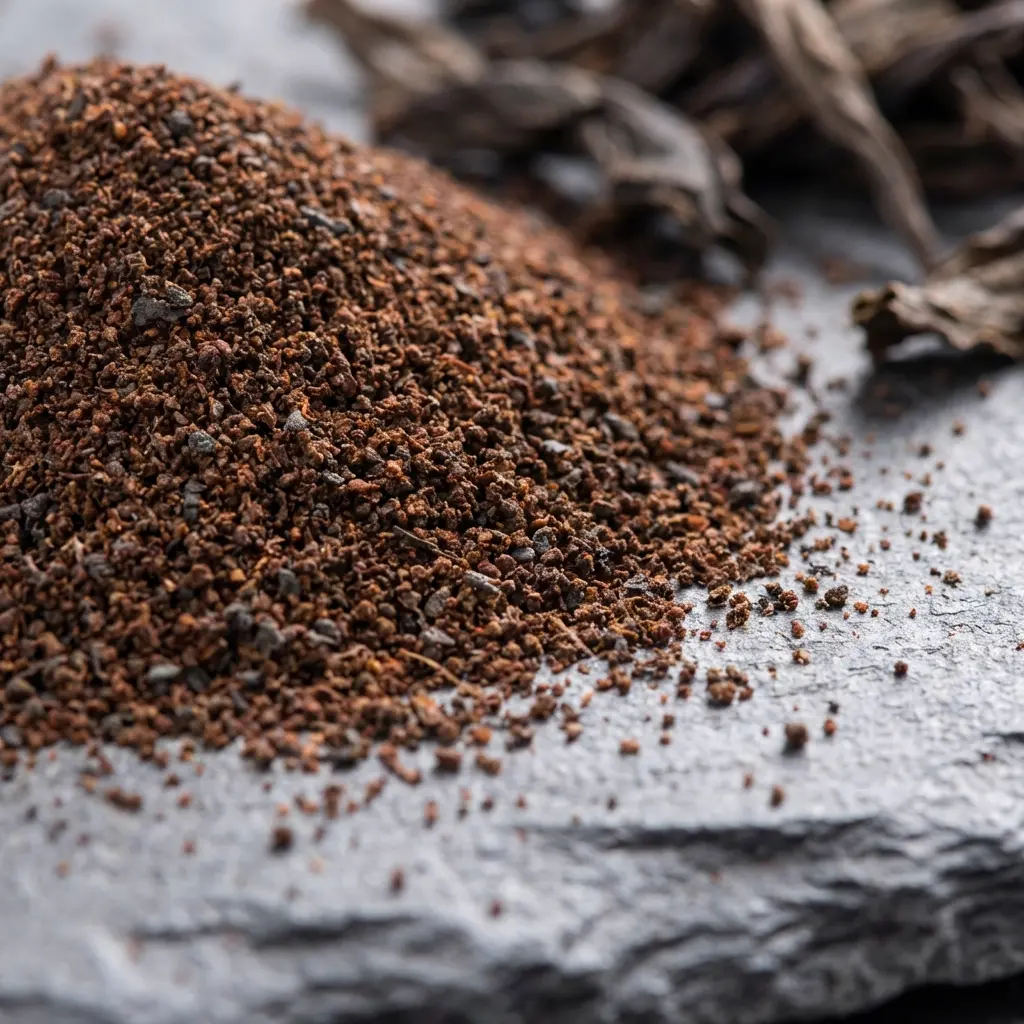
In the wholesale tea business, "dust" is not a dirty word. In many states, it's the highest-selling category by volume. But dust and leaf tea serve completely different customers, at different price points, for different reasons — and knowing exactly where each one fits is what separates a stockist who guesses from one who builds a real, repeat-buying customer base.
What "Dust" Actually Means
"Dust" refers to the smallest particle size produced during CTC (Crush-Tear-Curl) processing — not literal dust, but fine granules that brew fast and strong. Within the dust category, there are several recognised sub-grades worth knowing if you're buying or selling seriously:
- PD (Pekoe Dust): The most common hotel-grade dust, valued for strong colour and quick brewing.
- RD (Red Dust) / SRD (Super Red Dust): Slightly coarser than PD, still strong, popular for high-volume commercial use.
- SFD (Super Fine Dust): Finer than standard dust, very fast-brewing, often used in tea bags.
- CD (Churamoni Dust): A premium, fine dust grade — despite being "dust," this one commands a higher price than standard grades due to its cleaner cup.
Tea Dust: The Hotel and Dhaba King
- Pros: Brews almost instantly, gives a strong, dark colour with minimal quantity, and is highly affordable per cup.
- Target audience: Tea stalls and dhabas, railway stations, commercial canteens, and lower-income households where cost-per-cup matters more than delicate flavour.
- Typical wholesale pricing: Standard hotel dust generally runs ₹100–230/kg, while premium grades like CD can go higher, sometimes ₹250–440/kg depending on quality and sourcing.
- Best-selling grade: "Hotel Dust" or "Primary Dust" (PD) remains the top mover in this category. We supply wholesale tea dust for hotels across India.
Sourcing tea for your business?
Get wholesale pricing on premium CTC, Assam, and Darjeeling teas. We dispatch free samples across India within 48 hours.
Request Free Samples →Leaf Tea: The Household Favourite
"Leaf" tea usually refers to broken grades like BOP, BP, or BOPSM — larger particle sizes than dust, which changes both the brewing behaviour and the taste.
- Pros: Better, more rounded flavour; stays fresher for longer since larger particles oxidise more slowly than fine dust; generally less bitter when slightly over-brewed.
- Target audience: Middle-class households, office pantries, and premium cafés that value taste over speed of brewing.
- Typical wholesale pricing: Standard leaf grades generally run ₹200–320/kg, with premium orthodox leaf going considerably higher depending on origin and grade.
The "Family Mix" Strategy — What the Market Already Calls It
Many households and retailers don't want to choose one or the other — they want both. In the wholesale trade, this is commonly sold as a "Family Mix" tea, and it's a real, established product category, not just an internal idea.
A popular approach: roughly 70% leaf tea (for flavour) and 30% dust (for strength and colour). The leaf carries the taste; the dust makes sure the cup still looks and feels strong enough for Indian tastes, which generally expect a dark, robust cup even in a household blend.
We help retailers and private-label buyers build this exact ratio — see our full tea blending guide for the complete process, including how to test and adjust a blend before committing to a full batch.
Which Should You Stock? A Quick Decision Guide
- Running a tea stall, dhaba, or canteen? Stock dust (PD or RD) — customers want strong, fast, affordable chai, and dust delivers all three.
- Selling to households or running a café focused on taste? Stock leaf grades (BOP, BP, BOPSM) — the flavour difference is what these customers are paying for.
- Building a retail or private-label brand? Consider a Family Mix — it captures the strength Indian customers expect while still delivering a rounder taste than pure dust alone.
- Not sure which grade of dust to start with? PD is the safest, most broadly recognised starting point for hotel/commercial buyers; move to SFD if your customer specifically wants very fast-brewing tea (e.g., for tea bags), or CD if you're targeting a slightly more premium dust segment.
Frequently Asked Questions
What is the difference between tea dust and leaf tea?
Tea dust is the finest particle size from CTC processing — it brews quickly and gives strong colour at a low cost, making it popular with tea stalls, dhabas, and canteens. Leaf tea (grades like BOP, BP, BOPSM) is a larger particle size with a more rounded flavour, popular with households and cafés that prioritise taste.
What is PD grade tea?
PD stands for Pekoe Dust — the most common hotel-grade tea dust, known for strong colour and quick brewing. It's typically the standard choice for tea stalls and commercial canteens.
What is a Family Mix tea blend?
A Family Mix is a blend of mostly leaf tea (commonly around 70%) with a smaller portion of dust (around 30%), combining the better flavour of leaf tea with the strength and colour of dust — a popular choice for households that want both in one packet.
Is dust tea lower quality than leaf tea?
Not necessarily — they're different products for different needs, not a strict quality ranking. Premium dust grades like CD (Churamoni Dust) can command higher prices than basic leaf grades. The right choice depends on your customer's priorities: speed and strength (dust) versus flavour depth (leaf).